
Autumn Hair Shedding: Causes and How to Choose a Shampoo
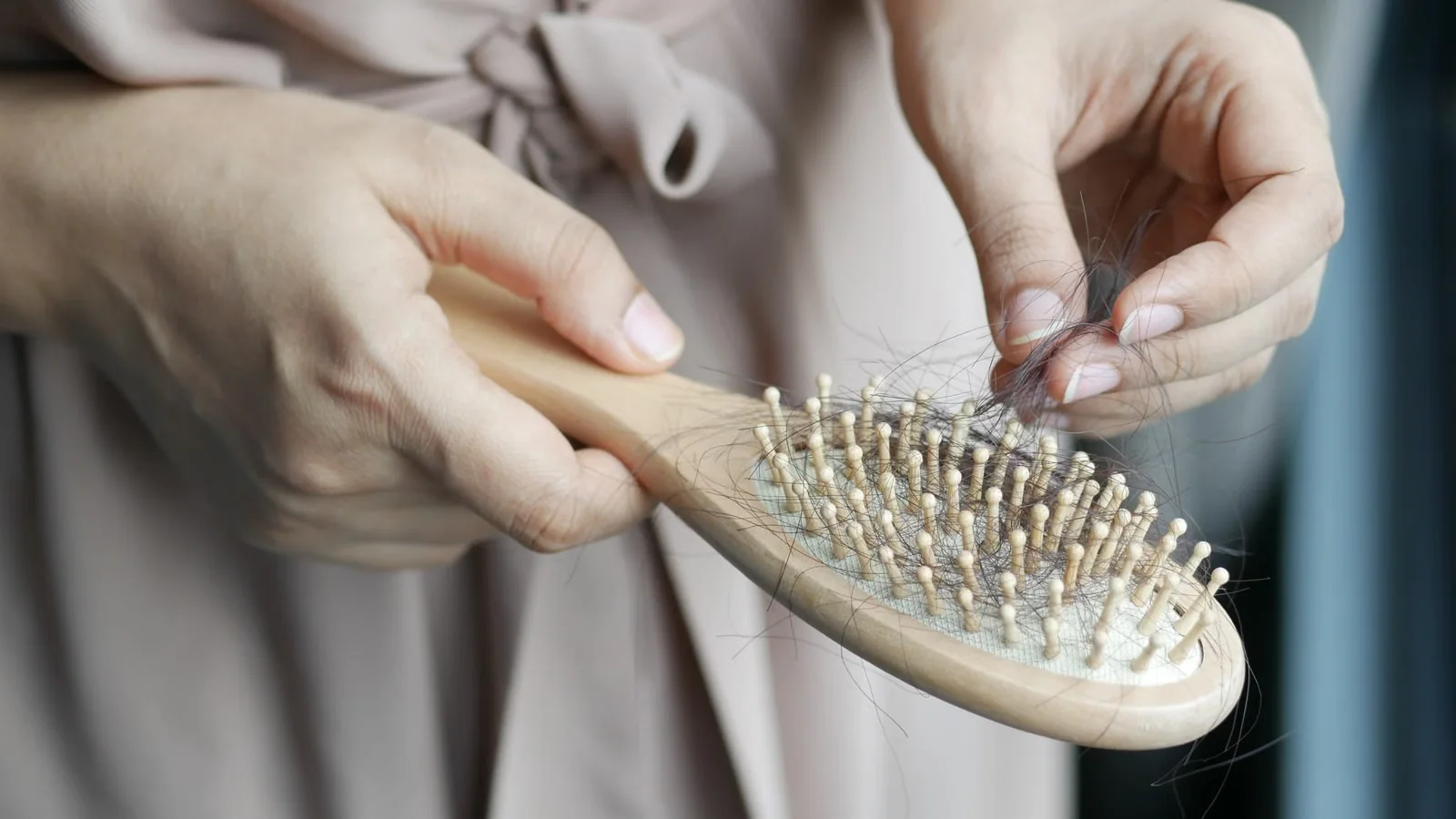
Why does hair shed more in autumn, how many hairs a day is normal and which shampoo suits your scalp type? We also cover when to see a specialist.
Short answer: Autumn hair shedding is usually seasonal and temporary. Some hair follicles move into a resting phase during the summer months, and those hairs fall out around three months later, in autumn. This kind of shedding generally eases on its own within a few weeks to a few months. In the meantime, a shampoo suited to your scalp type and a gentle care routine can help reduce breakage-related hair loss and help your hair look stronger. If shedding lasts longer than three months, thins your hair or leaves bald patches, you should see a dermatologist.
What causes autumn hair shedding?
Every hair goes through three phases: growth (anagen), transition (catagen) and rest (telogen). At any given time, most of your hair is in the growth phase. Hairs that enter the resting phase stay in place for about three months, then fall out to make room for the new hair growing beneath them.
At University Hospital Zurich, researchers reviewed six years of data on 823 women who had sought help for hair shedding but had no condition causing hair loss. The proportion of hairs in the resting phase peaked in the summer months, with a smaller second rise in spring. Hairs that enter the resting phase in summer and fall out a few months later are the most likely explanation for the extra hair we notice in our combs and in the shower in autumn.
Over the summer, sun, seawater, chlorine in swimming pools and frequent washing also wear down the hair. In autumn, when these weathered strands break at the same time as hairs are shed from the root, the loss can look greater than it really is. As the weather turns colder and the central heating goes on, the scalp can also dry out, which may make itching and flaking worse.
How many hairs a day is normal?
Dermatology sources generally consider losing an average of 50 to 100 hairs a day to be normal. The number can look higher on the days you wash your hair, because hairs that loosened over the previous days come out together while you wash and comb. The same number of hairs also looks like far more on long hair than on short hair.
What matters is the overall trend rather than the count on any single day. If the shedding is easing within a few months and your parting, crown and temples are not thinning, you are most likely dealing with seasonal hair loss.
Seasonal shedding, breakage and hair loss that needs a specialist
- Seasonal shedding: This happens evenly across the whole head and eases within a few weeks or months. You will see a small, pale bulb at the end of a shed hair, which shows that it fell from the root after completing its natural cycle.
- Breakage: Hairs snap partway along the length or at the ends rather than at the root, so the pieces that fall are short, with uneven ends. Frequent heat styling, colouring, bleaching and tight hairstyles are the main causes.
- Hair loss that needs a specialist: If heavy shedding lasts longer than three months, if there is noticeable thinning at the parting or crown, if round bald patches appear on the scalp, or if it comes with redness, pain or heavy flaking, it is not seasonal shedding.
How to choose a shampoo for your scalp type
Shampoo stays on your scalp for only a few minutes. Its main job, therefore, is to cleanse the scalp in a way that suits its type, keep it comfortable and balanced, and avoid roughening the hair as you wash. The right shampoo will not change genetic hair loss, but it can help reduce breakage, maintain the scalp's balance and help hair look fuller. When choosing a shampoo for hair shedding, start by looking at your scalp.
Oily scalp
If your roots turn greasy within a day and your hair looks flat at the root, choose a formula that removes excess oil without drying out the scalp. KDID Puriva Oil Balance Shampoo, with rosemary oil, biotin and aloe vera, was developed for oily scalps and scalps prone to oiliness. It helps keep excess sebum in check and maintain the scalp's natural oil balance.
Dandruff-prone or itchy scalp
When white or yellowish flakes, itching and oiliness appear together, a shampoo containing salicylic acid helps gently clear away flakes and build-up. With a formula containing salicylic acid, lactic acid and menthol, KDID Calmera Scalp Comfort Shampoo was developed for scalps prone to oiliness, visible dandruff and product build-up. If dandruff persists despite regular care, or comes with redness and intense itching, consult a dermatologist.
Fine, weak hair that breaks easily
If your hair is fine and brittle, opt for a formula that moisturises without weighing it down. KDID Equisera Shampoo, with horsetail extract, biotin and hyaluronic acid, was designed for weak hair that is prone to breakage and damage.
Increased shedding when the seasons change
KDID Follica Shampoo, with biotin, keratin, collagen and caffeine, is formulated for hair that is weak, prone to breakage and showing visible shedding. It supports daily care focused on the scalp and hair roots, and helps hair look stronger and more resilient.
Beyond shampoo: scalp tonic and mask
A leave-in tonic applied directly to the scalp keeps its care ingredients on the scalp for longer than a shampoo can. KDID Toniva Hair & Scalp Tonic, with biotin, caffeine, keratin and horsetail extract, is applied section by section to a clean scalp that is dry or slightly damp, spread with a gentle massage and left in without rinsing. If you are sensitive to plant extracts, try it on a small area before using it for the first time.
For the lengths and ends, KDID PDRN Hair Mask, with keratin, silk protein and argan oil, can be used two or three times a week. After shampooing, squeeze out the excess water, apply the mask to the lengths and ends, leave it on for 5–10 minutes, then rinse thoroughly.
7 good hair care habits for autumn
- Don't put off washing. Washing does not make hair fall out; it simply makes visible the hairs that were already ready to shed. Leaving an oily scalp unwashed for long stretches can make itching and dandruff worse.
- Use lukewarm water. Very hot water dries out the scalp and upsets its oil balance.
- Shampoo on the scalp, conditioner on the ends. Work the shampoo in with your fingertips using a massaging motion, without scratching with your nails. Apply conditioner and masks to the lengths and ends.
- Be gentle with wet hair. Wet hair snaps more easily. Pat it dry with a towel instead of rubbing, and detangle it with a wide-toothed comb, starting from the ends.
- Turn down the heat. Use your hairdryer on a medium or low setting, and apply a heat protectant before using straighteners or curling tongs.
- Avoid tying your hair back tightly. Constantly wearing tight ponytails, plaits and buns puts strain on the roots and can lead to hair loss caused by pulling (traction).
- Look after your diet and sleep. Enough protein and iron, along with regular sleep, support your hair's natural cycle. Before starting a vitamin or mineral supplement, have your blood levels checked by a doctor.
When should you see a dermatologist?
Cosmetic products are not a treatment for hair loss; they support the care of your hair and scalp. See a dermatologist if:
- heavy shedding lasts longer than three months
- your parting is widening, or your crown and temples are noticeably thinning
- round bald patches have appeared on your scalp
- there is redness, pain, burning or heavy flaking
- the shedding began after giving birth, a serious illness, rapid weight loss or starting a new medication
Causes such as iron deficiency and thyroid disorders can only be identified through blood tests, and your doctor will decide on the right approach.
Frequently asked questions
How long does autumn hair shedding last?
Seasonal shedding usually lasts anywhere from a few weeks to two or three months and eases on its own. If it goes on for longer than that, or your hair becomes noticeably thinner, consult a dermatologist.
Can changing your shampoo make your hair fall out?
No. The hairs you notice in the shower after changing shampoo were already in the resting phase. If a new shampoo leaves your scalp dry or itchy, or makes it greasy quickly, it may not suit your scalp type.
How long should you use a shampoo for hair shedding?
Hair grows by about 1 centimetre a month on average, and the resting phase lasts around three months. That is why you need at least two to three months of regular use to judge the effect of a care routine.
Do biotin shampoos work?
Biotin is used in cosmetic formulas to care for the hair and scalp. Shedding linked to a biotin deficiency, however, can only be identified with a blood test and must be addressed under a doctor's guidance; the biotin in a shampoo does not make up for a deficiency.
Where can I buy KDID hair care products?
KDID is a dermocosmetics brand built on trust, science and quality. In Türkiye, its products are available only through pharmacies and authorised sales channels. You can find your nearest pharmacy on our Points of Sale page.
For more on the moisture and protein balance of your hair, take a look at our article Moisture, Protein and a Regular Routine in Hair Care.